LOCATION | Amsterdam, The Netherlands
YEAR | may 2025
TYPE | Research & Experimentation / Interactive Installation
THEME | Spatial Translation of Psychological States Through Material Language
METHODS | Artistic Research, Spatial Experimentation, Relief Sculpture, Material Exploration, Visual Storytelling, Photography
MEDIUM | Modelled clay on painted canvas, rotating installation
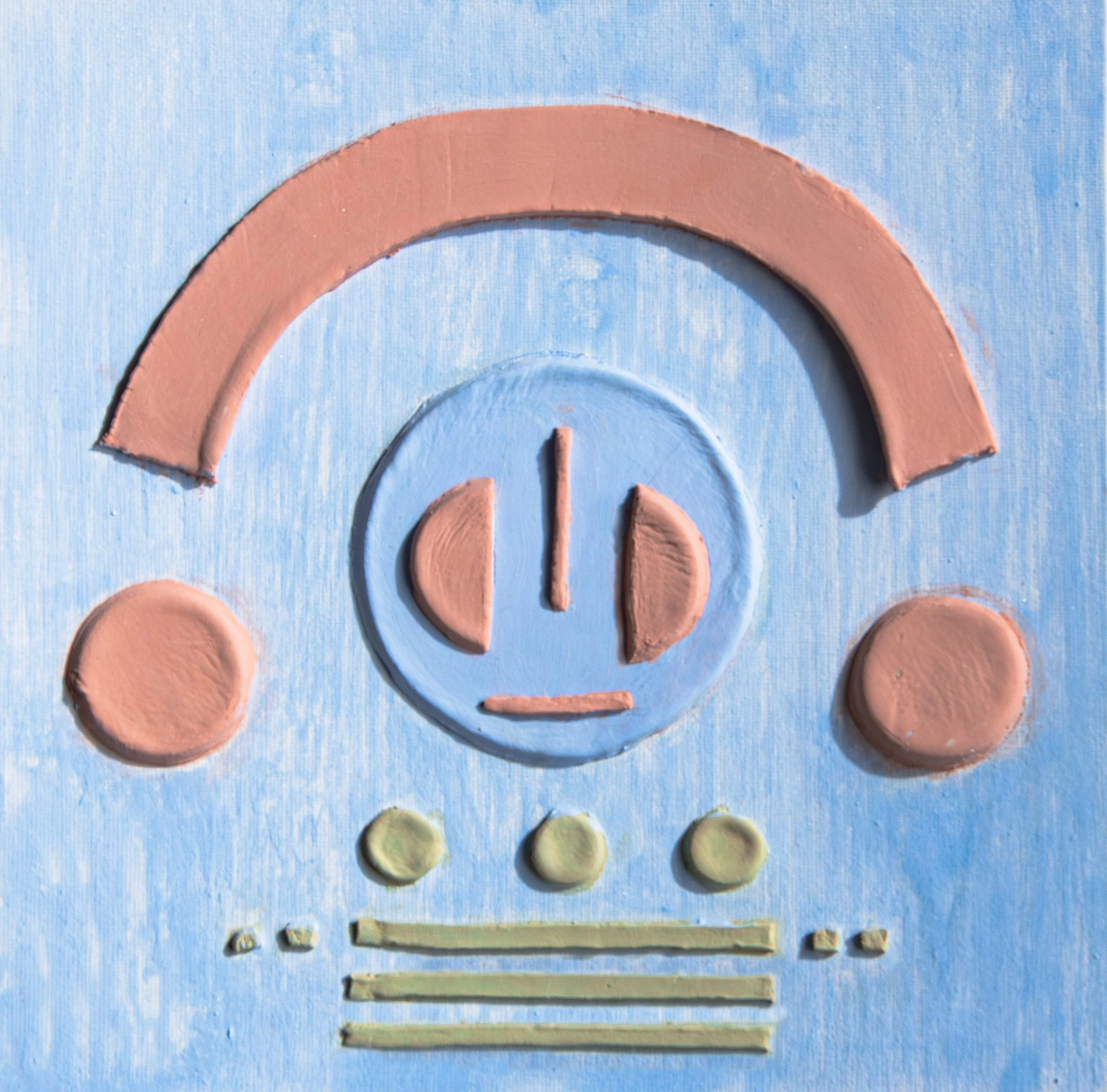
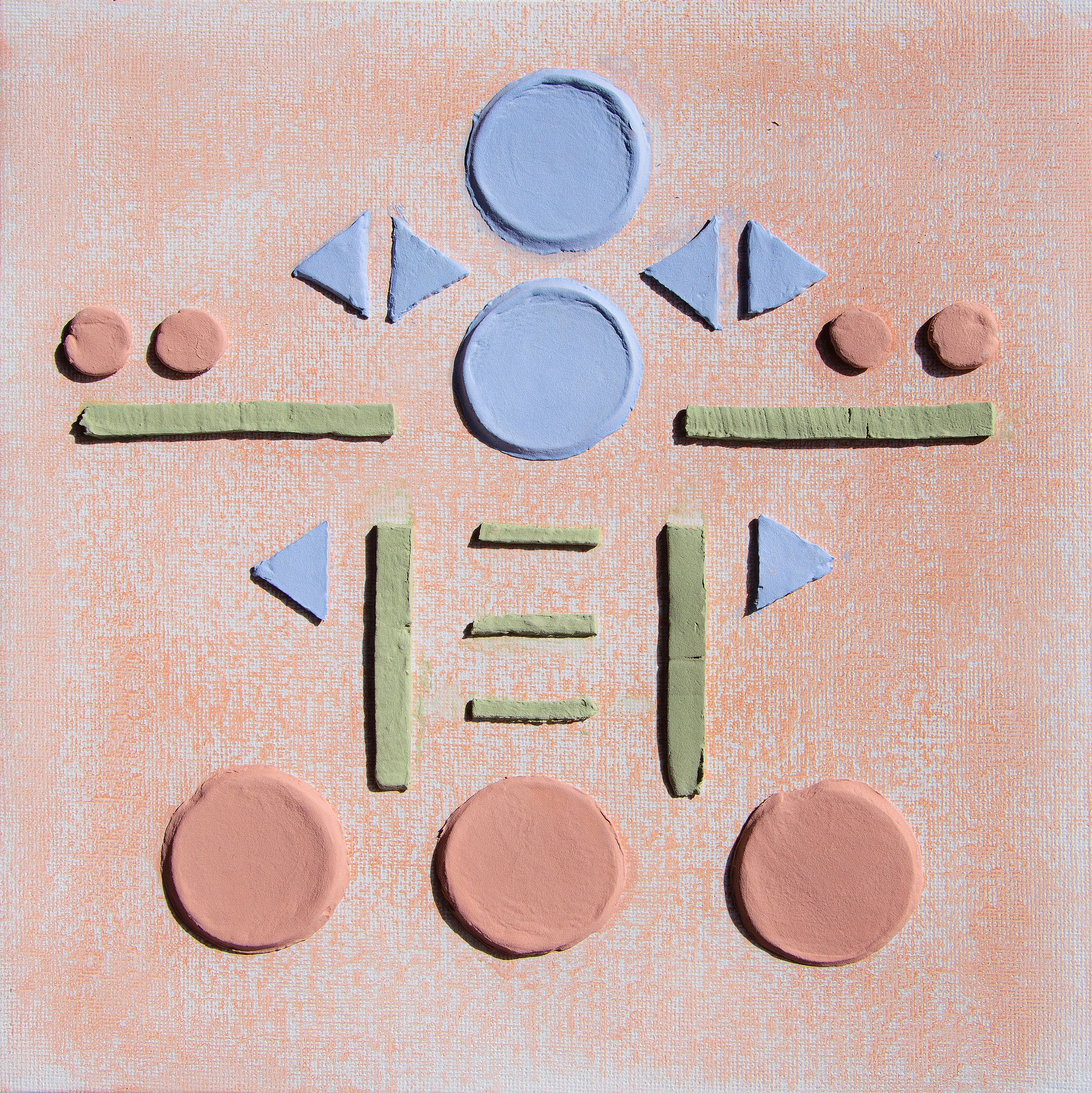
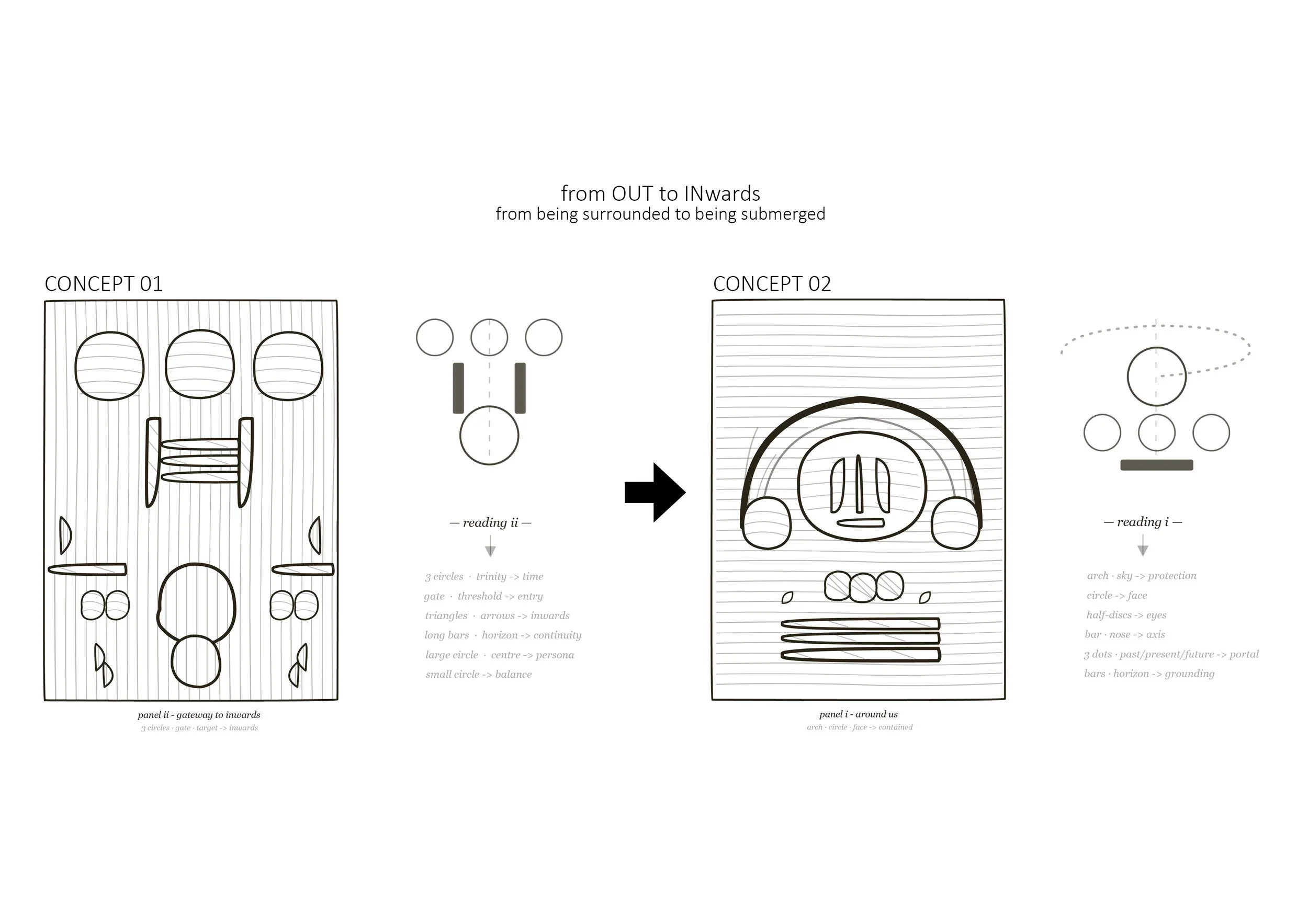
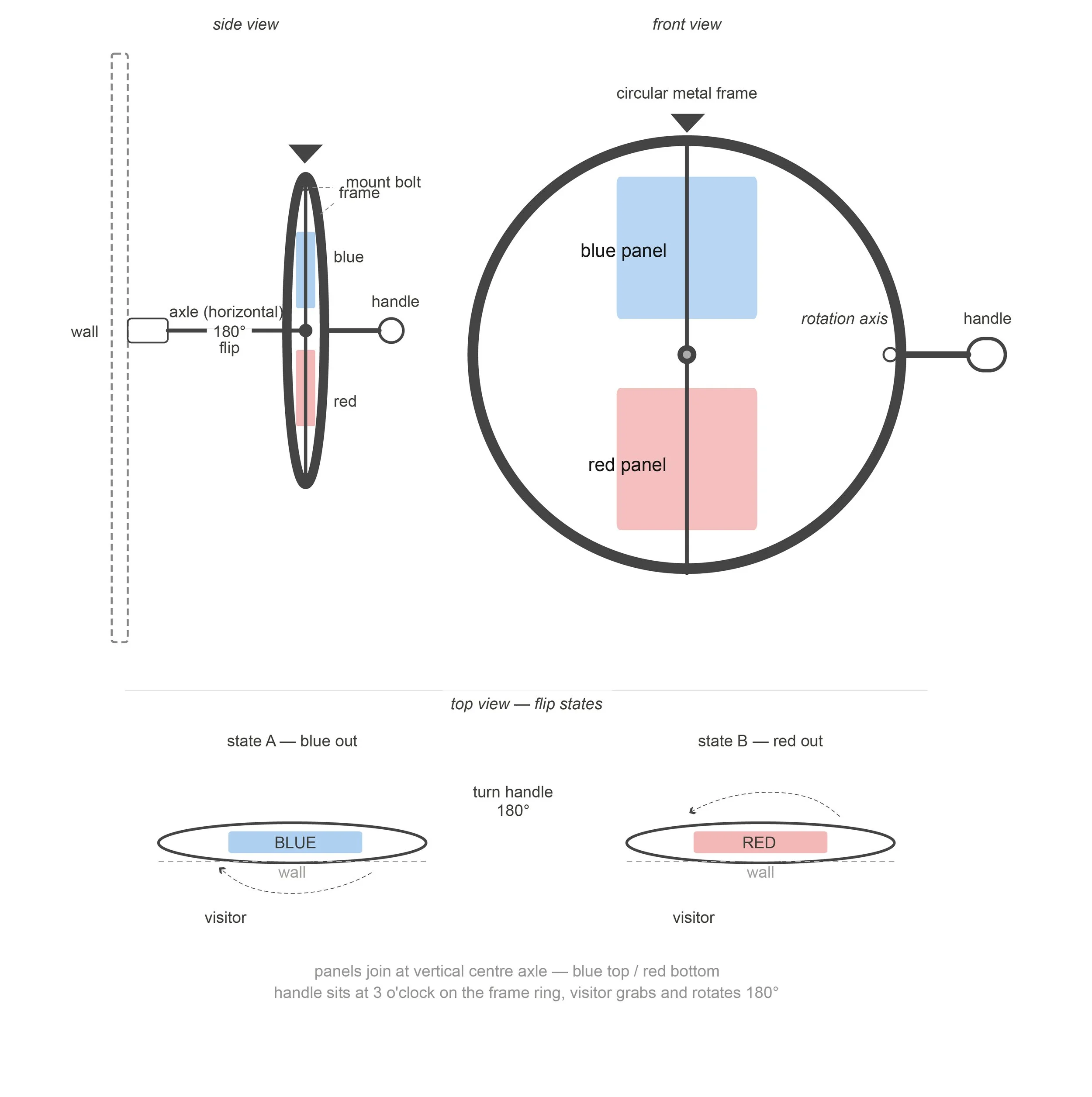
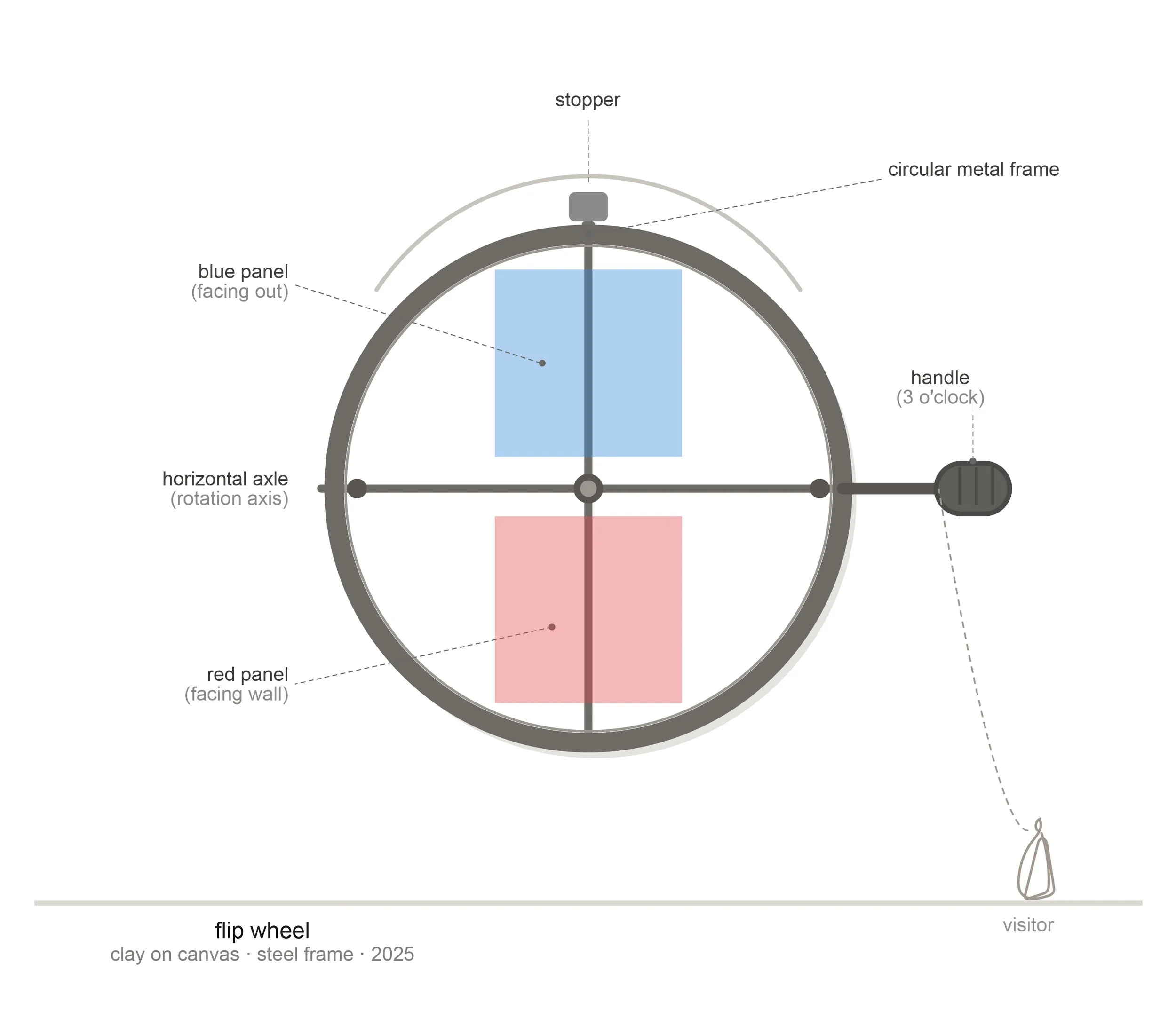
CONCEPT | RGB – Clay Frequencies is a research-driven spatial apparatus that investigates how psychological states can be translated into material, spatial and participatory language. As the first work in the series, it explores the cyclical relationship between introversion and extroversion through two interconnected relief panels activated by a rotating mechanism. Inspired by the logic of a lucky wheel, the installation invites participants to engage through movement, revealing one of two opposing yet complementary conditions. Through this act of rotation, the work transforms perception into an embodied experience, positioning identity not as a fixed state but as a continuous oscillation between expression and reflection, presence and withdrawal.
SPATIAL CONCEPT |
The installation operates as a closed perceptual circuit rather than a linear narrative. Two panels form complementary poles within a rotational system, guiding participants through a spatial and psychological journey from outward projection to inward contemplation. Meaning emerges through movement, orientation, and interaction, transforming the participant into an active agent within the work. The installation investigates how bodily engagement and spatial sequencing can generate shifts in awareness, perception, and self-reflection.
MATERIALITY |
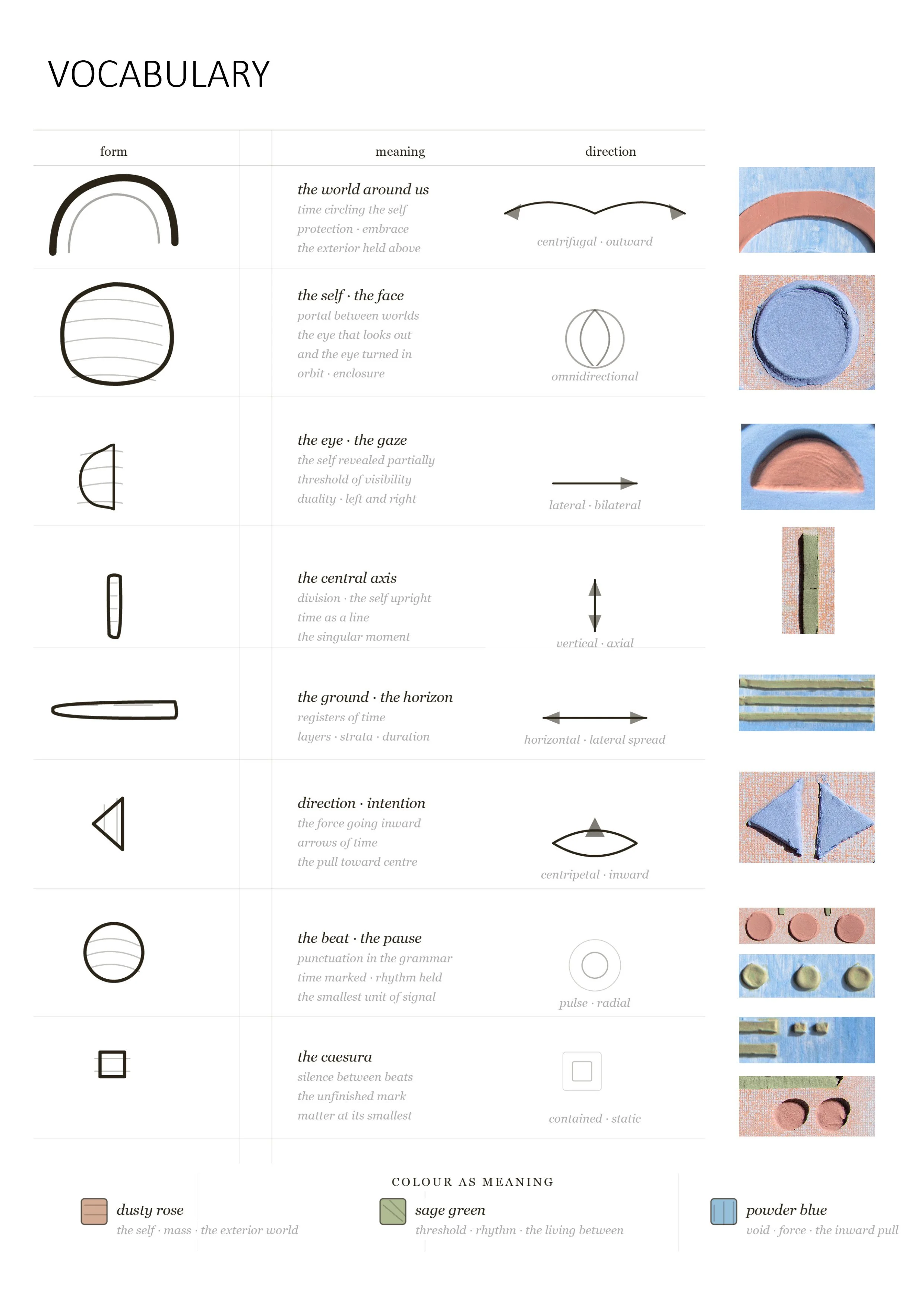
Clay functions as both medium and language. Combined with terracotta red, powdered blue pigment, and sage green references, the work translates RGB color frequencies into physical matter. These materials operate as symbolic anchors within a coded sensory vocabulary, where color, texture, and form become carriers of psychological and spatial meaning. The tactile quality of clay preserves traces of gesture and touch, embedding human presence directly into the material surface.
FORM & MOVEMENT |
A shared vocabulary of geometric forms appears across both panels, while their directional syntax shifts entirely. Relief elements cast subtle shadows that animate the surface and generate spatial vibration through changing light conditions. Rather than functioning as isolated compositions, the panels operate as interconnected states within a continuous system, where visual information rotates between expansion and contraction, exteriority and interiority. The work proposes movement not as physical displacement alone, but as a perceptual transition between psychological conditions.
TECHNIQUES |
The project combines relief modelling in terracotta with layered pigment applications and photographic documentation. Repetition, pressure, and gesture are embedded directly into the clay surface, transforming material processes into a coded visual language. The rotational installation mechanism extends this investigation beyond the object itself, introducing participation as an essential component of the research and allowing the work to be activated through interaction.
PERCEPTION & INTERACTION |
The installation is completed through participation. By turning the work, participants engage in a process of chance, discovery, and self-observation, encountering one of two psychological states. Meaning is not prescribed through representation but emerges through the relationship between movement, color, symbol, and spatial orientation. The work unfolds as a perceptual device that invites participants to navigate their own position between inward and outward modes of being.
REFLECTION |
RGB – Clay Frequencies explores the potential of material and spatial systems to communicate beyond conventional language. Positioned between artistic research and experiential design, the project proposes a coded vocabulary where color anchors meaning, repetition constructs dialect, and movement generates understanding. Through the interaction of clay, rotation, and perception, the work investigates how psychological states can be translated into embodied spatial experiences, revealing identity as a dynamic condition continuously shaped through interaction, interpretation, and change.unication.