ATMOSPHERIC MORPHOLOGIES | atmospheres in matter
- A sensory reading of urban morphology through materials -
Series 01, Amsterdam,NL, Oct.2025, 21x29.7 cm
Location: Amsterdam, The Netherlands
Year: October 2025
Type: Spatial & Material Research
Services: Phenomenological Site Analysis & Atmospheric Mapping, Research & Prototyping, Visual Storytelling & Presentation Design
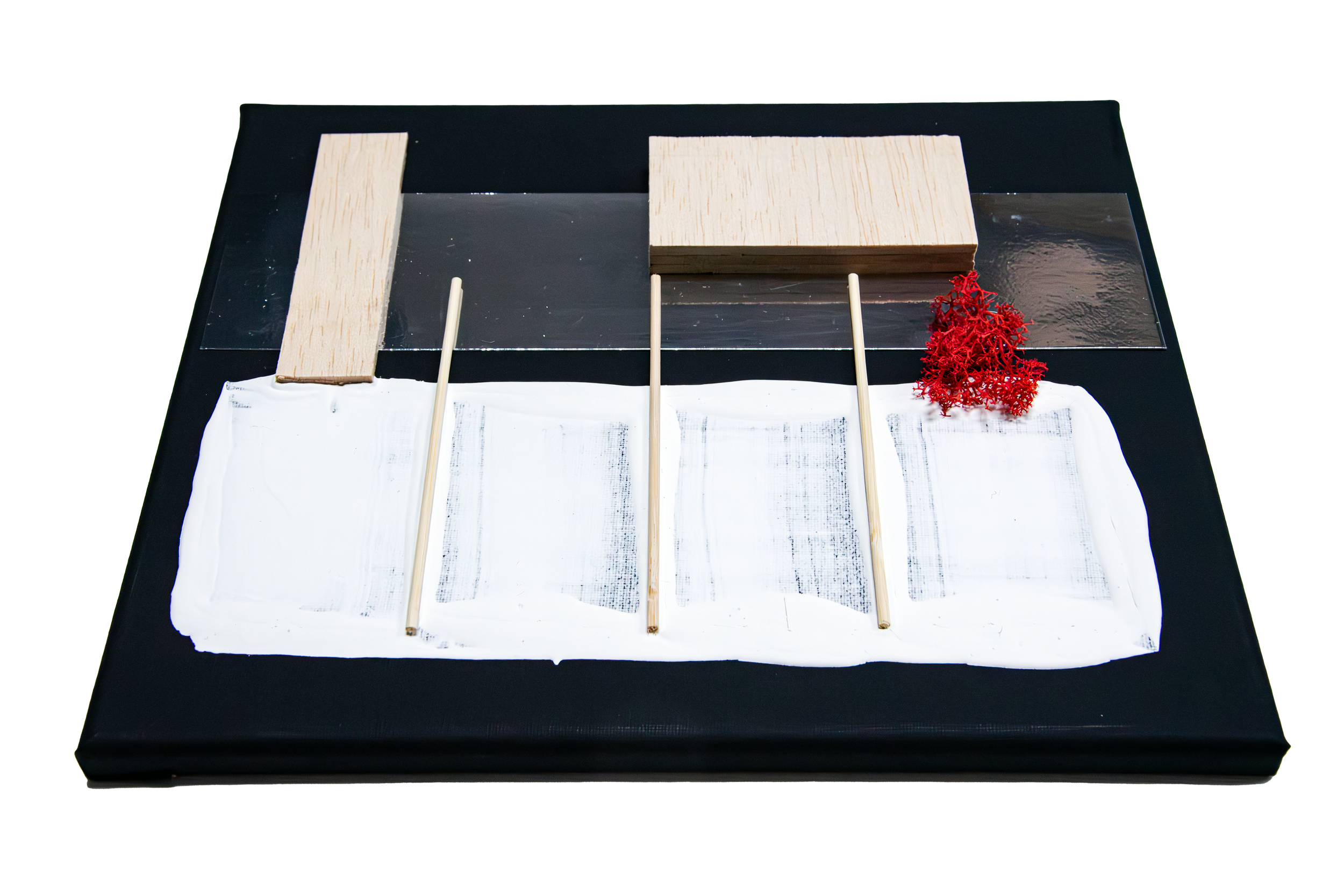
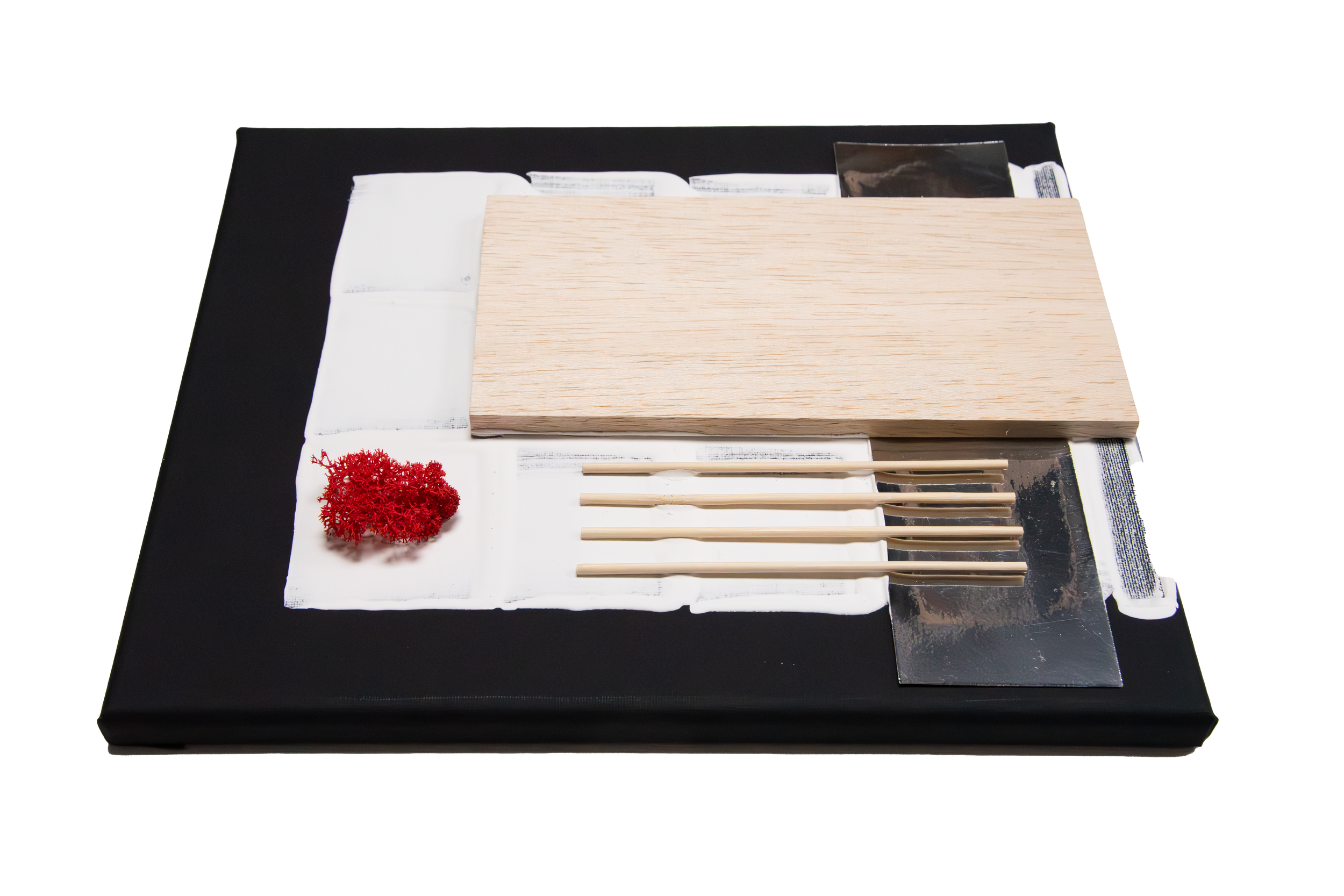
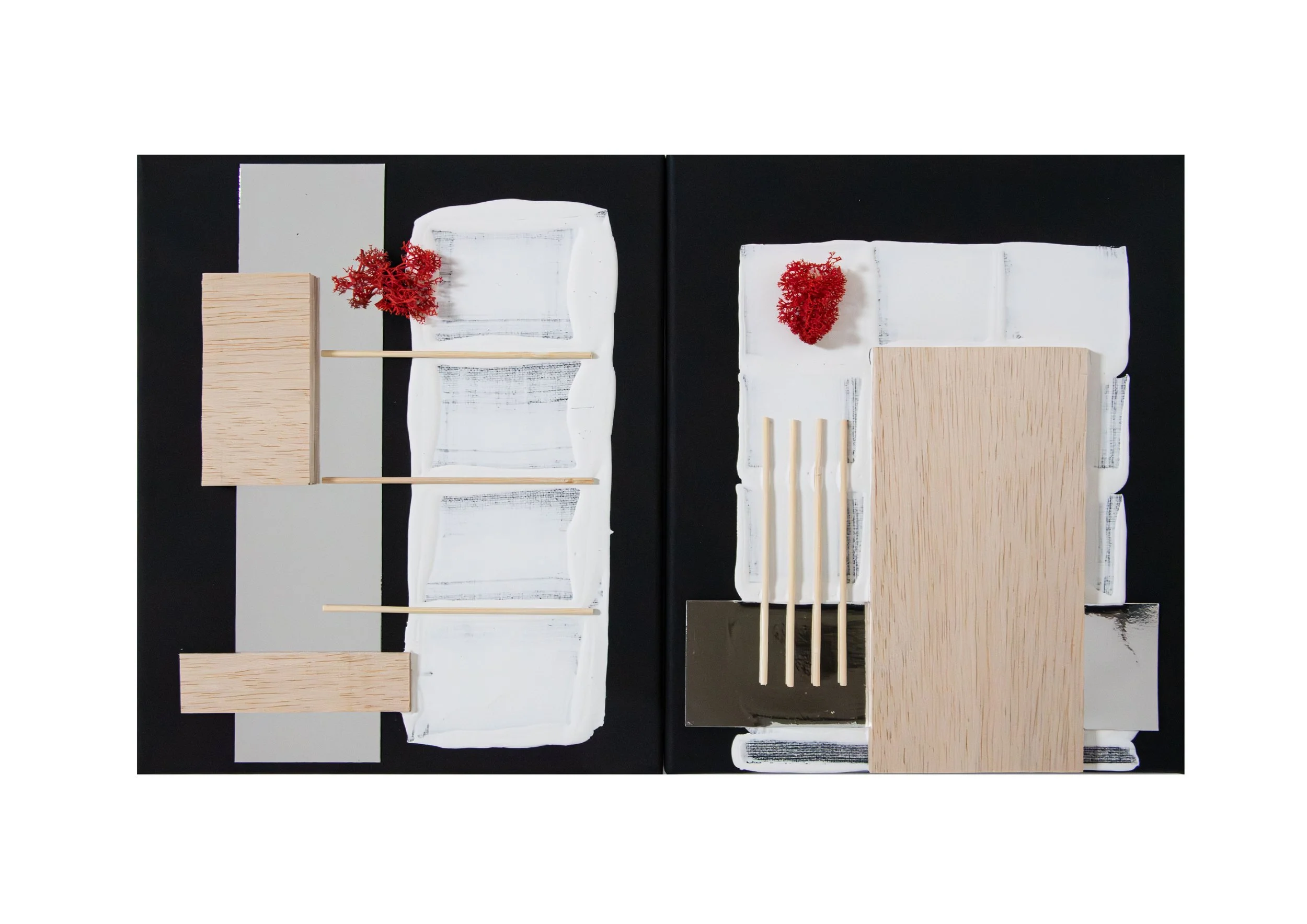
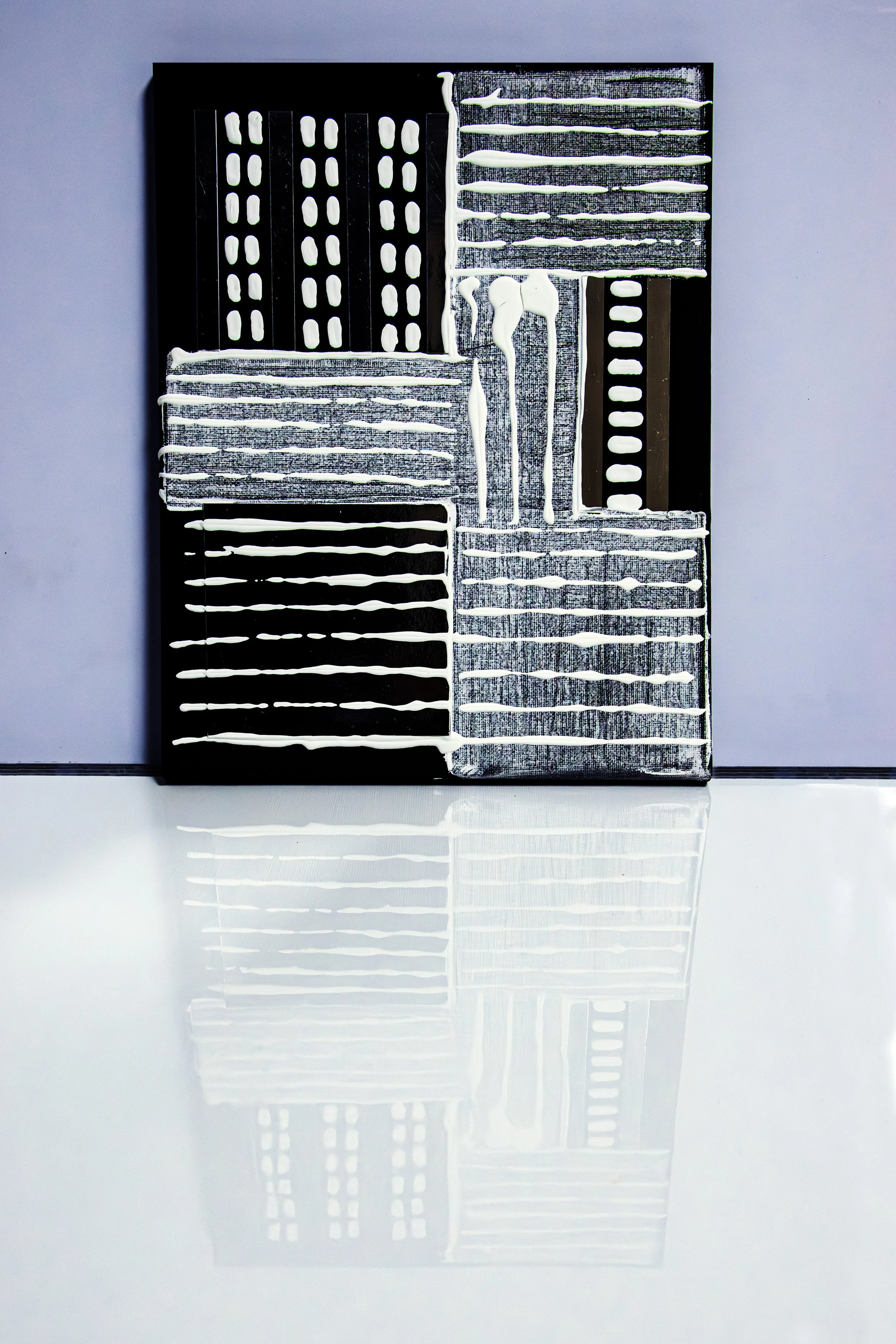
Medium: White acrylic, metal sheet, wood and organic matter on painted canvas
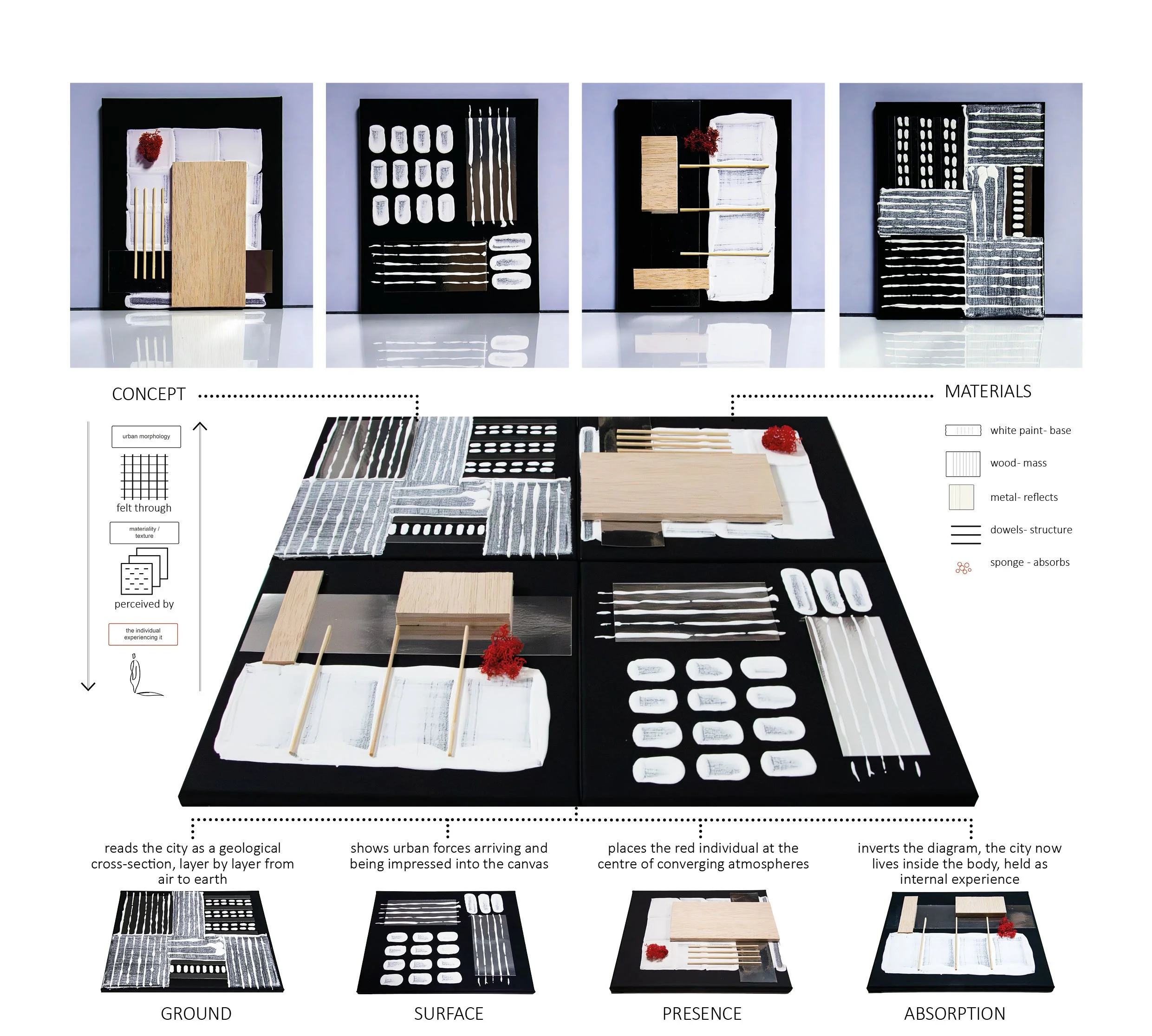
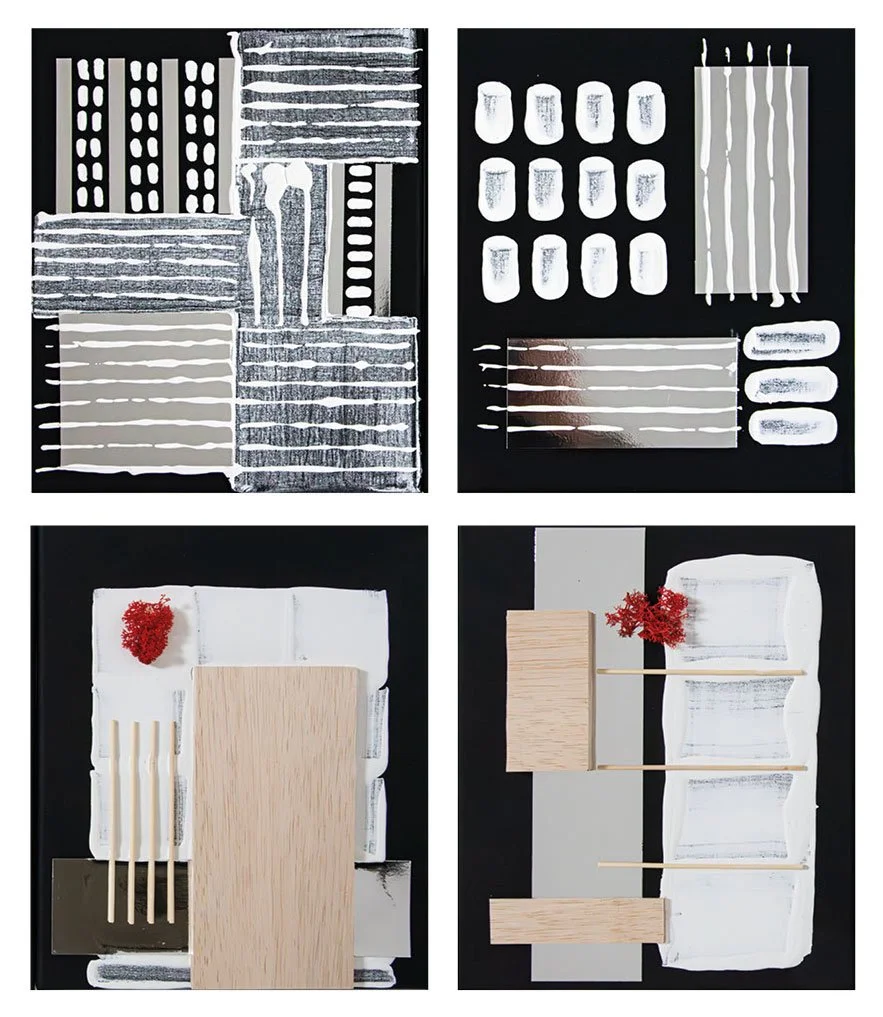
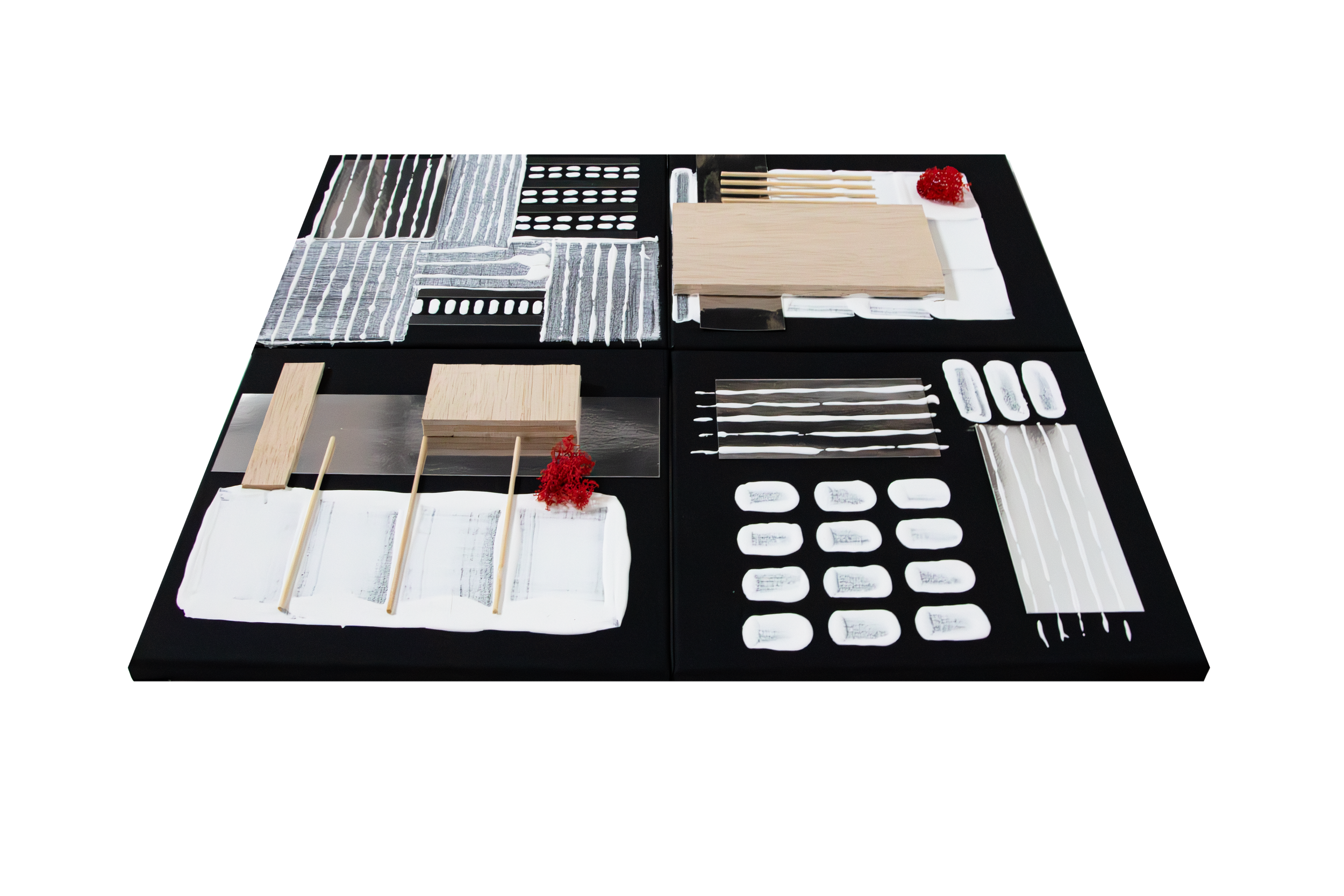
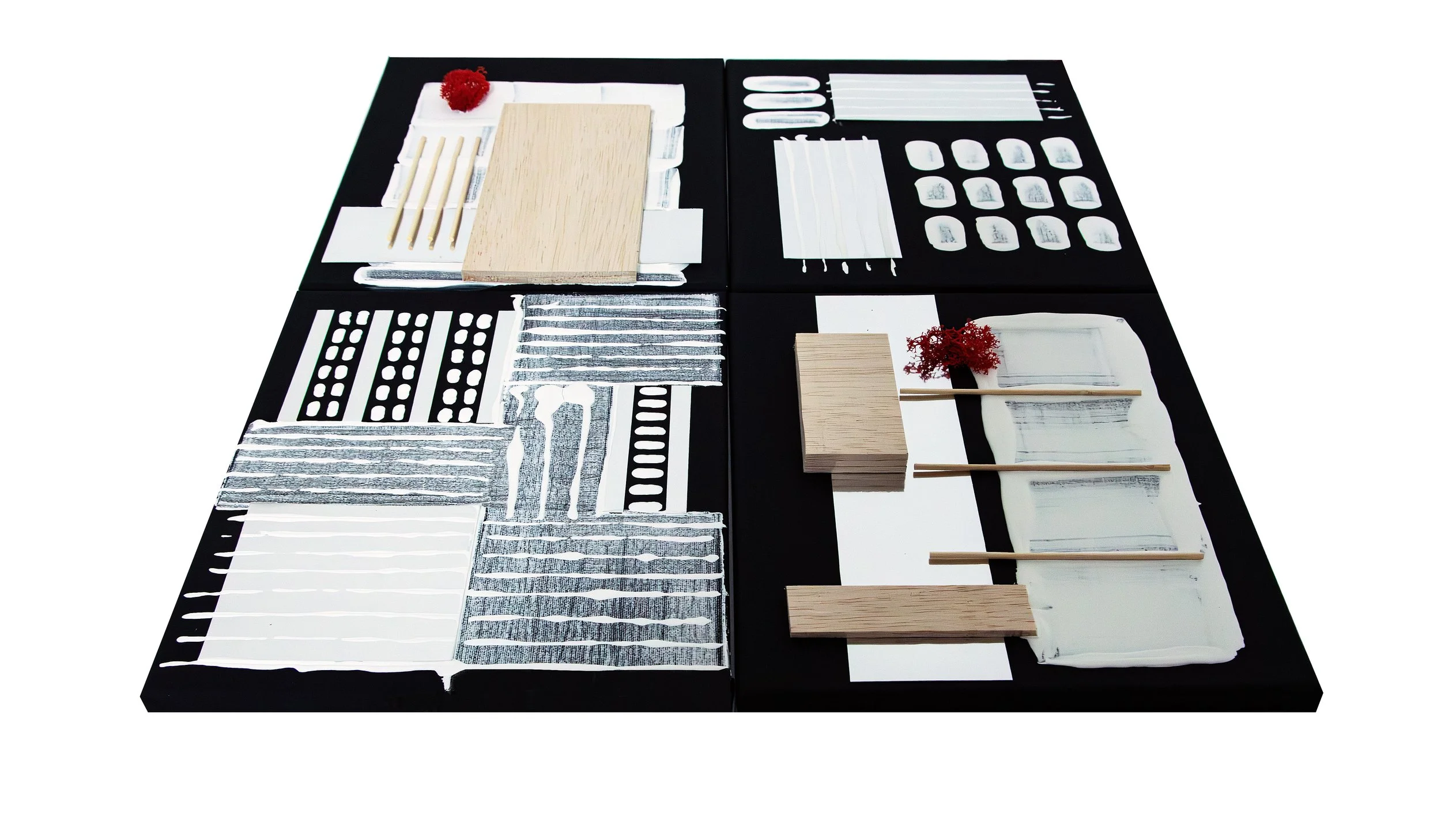
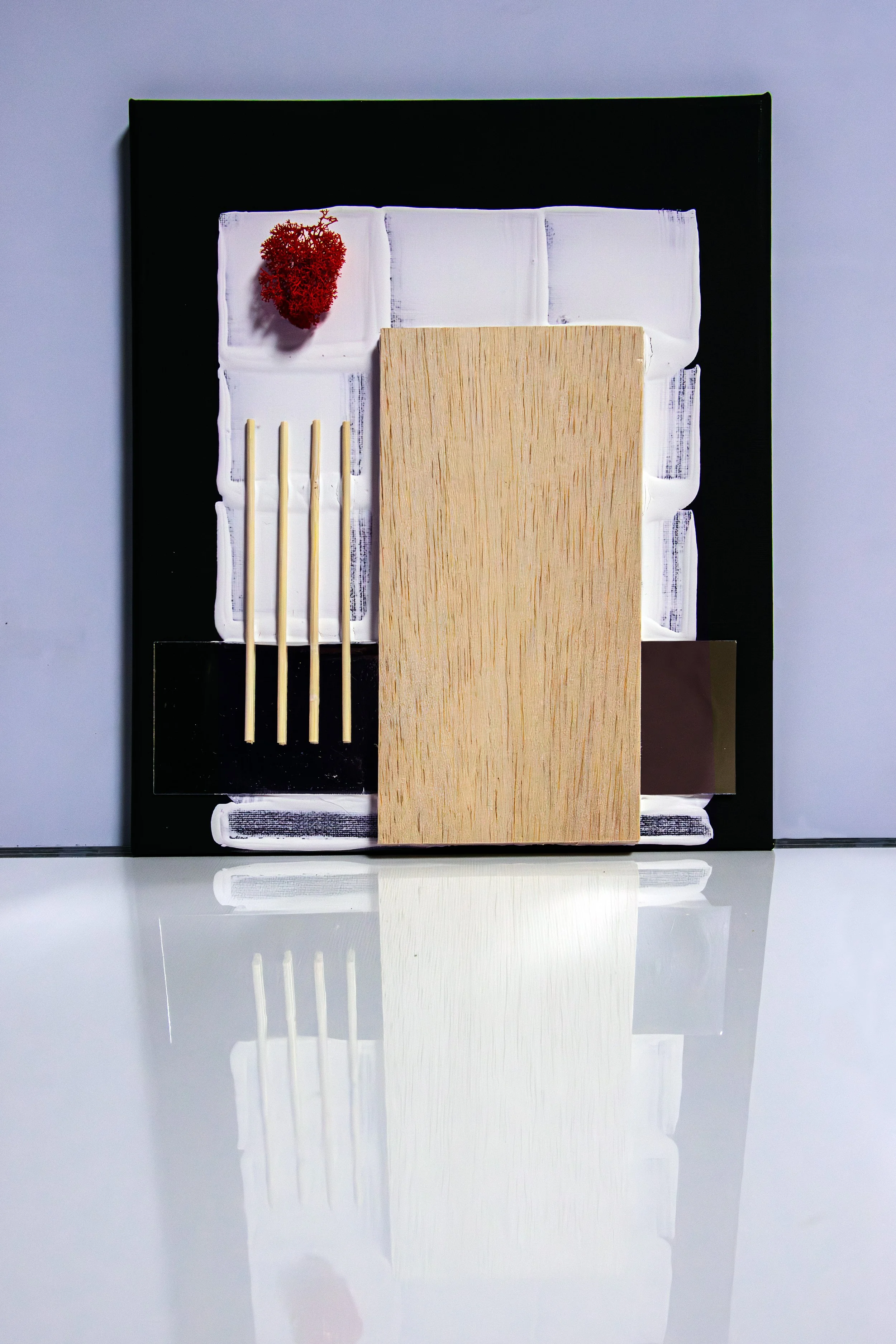
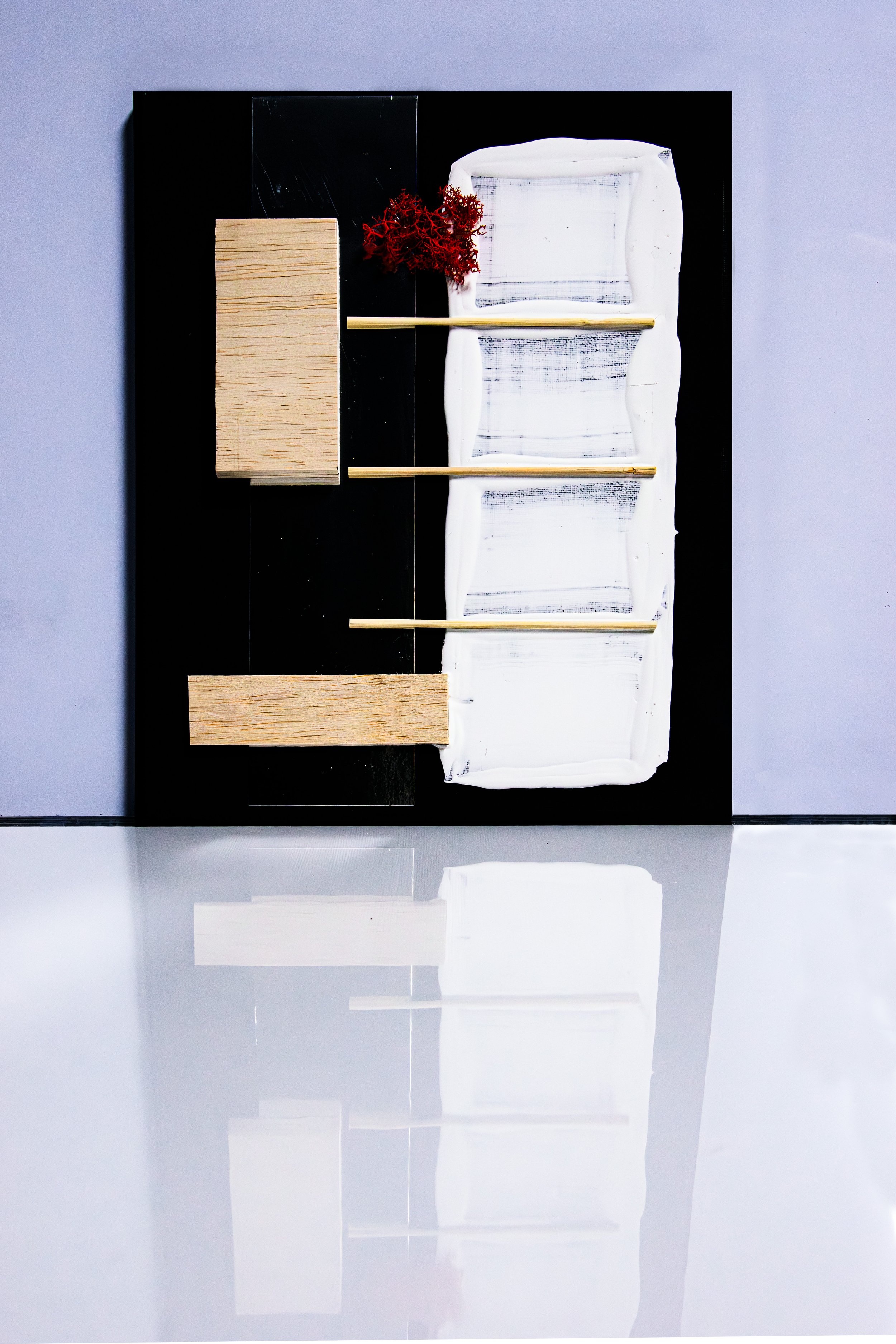
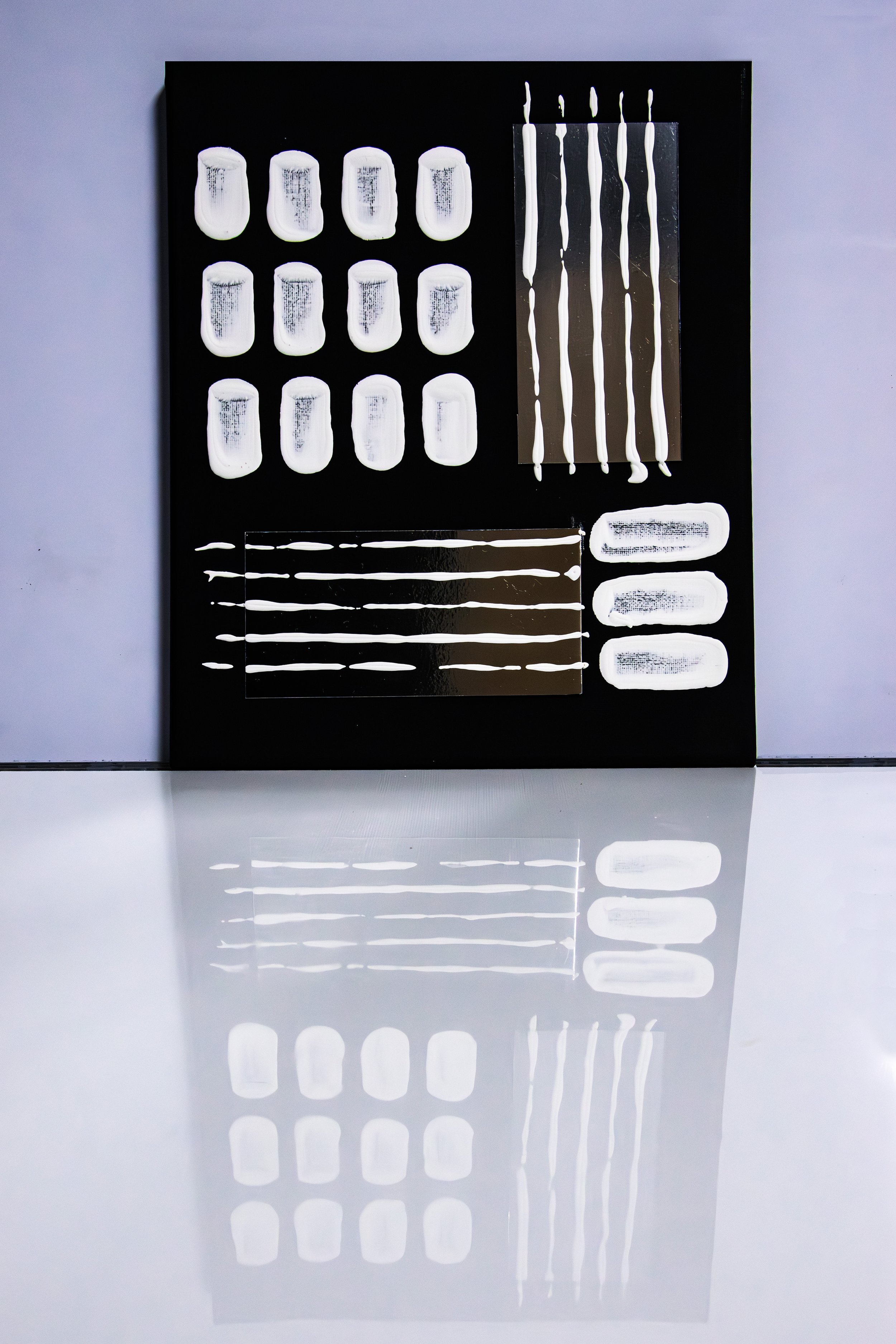
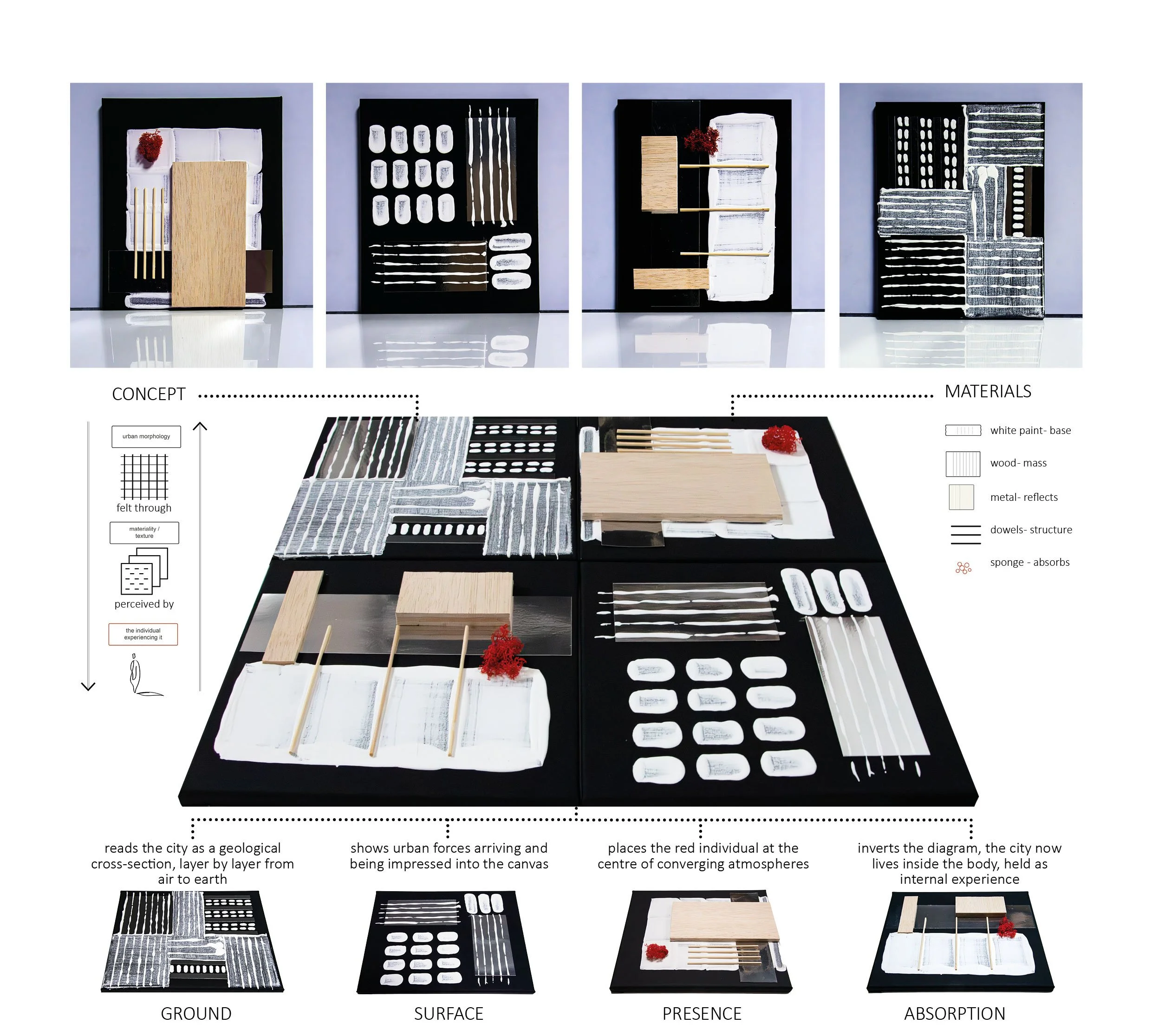
Description: Four mixed-media canvases translating the elemental conditions of the city into material form. White acrylic reads as paved surface and open air. Silver metal sheet captures the reflective instability of water. Wood carries the warmth and density of built structure. Black canvas anchors the ground beneath. Against this mineral logic, a single red organic element - the only warm, irregular presence - marks the point where the city stops being an external condition and becomes an internal experience. The city not mapped but absorbed. Atmosphere as design material.
OVERVIEW | This series of mixed-media works approaches the city not as a mapped or measurable system, but as a sensory field—something that is experienced through atmosphere, texture, and bodily perception. It translates urban space into matter, shifting from representation to embodiment, where the city is not seen from a distance but felt from within.Across four canvases, the work constructs a quiet spatial reading of urban morphology, where elemental forces become material language and perception replaces cartography.
MATERIAL SYSTEM | Each material carries a specific urban condition:
White acrylic suggests the flat neutrality of paved surfaces and the openness of air.
Silver metal sheet reflects the shifting, unstable qualities of water and light.
Wood introduces the warmth, density and vertical logic of built structures.
Black canvas anchors the composition as ground—the underlying earth condition.
Together, these elements form a layered reading of the city as a stratified environment: ground beneath, walls around, sky above, and water as reflective interruption.
SPATIAL PERCEPTION | Rather than depicting a city, the four canvases operate as fragments of a spatial condition. They propose an urban field defined not by geometry or map, but by tension: between opacity and reflection, density and openness, surface and depth. The city emerges as a continuous atmospheric field, where materials carry memory and structure becomes sensation.
THE RED ELEMENT | Within this controlled material logic, a single red organic presence interrupts the system. It is the only warm and irregular element, resisting the neutrality of surface and structure. It can be read as the individual moving through the city, but also as a more internal condition: a receptive body that absorbs its surroundings. Porous and sensitive, it marks the moment where the city stops being an external construct and becomes internal experience—lived through proximity, rhythm, and touch.
CONCLUSION | The series ultimately shifts the understanding of urban space from object to atmosphere. It proposes the city as something that is not only built and observed, but absorbed—an environment that enters the body and reshapes perception from within.